C3 · 出版卷 13
Sampling Design
Orientation survey、spacing、support、duplicates、field practice
学习目标
读者应能把 decision 转化为 target population 与 sampling frame;用 Orientation Survey 估计 footprint、variance 与 failure condition;协调 location、spacing、direction、support 与 field practice;区分 duplicate 与 independent sample;在看到 production data 之前写明 acceptance、redesign 与 stopping rule。
Sampling Design 不是在地图上画规则网格,而是 inference、material support、spatial selection、field execution、QA/QC 和 follow-up 的联合设计。密集但有偏的 frame 可能不如较稀疏的 probability-based 或 process-stratified design。合理密度取决于 footprint、variability 和 action,不取决于惯例数字。
Decision、Population 与 Measurand
从 survey 可能改变的行动开始。Regional screening、catchment prioritisation、anomaly boundary、process discrimination 和 baseline characterisation 需要不同 population 与 error tolerance。Target population 应定义为 material unit 而不只是 coordinate,例如可达研究区 residual domain 中,指定 horizon 和 size fraction 的物质。
Sampling frame 是可实际选择位置的清单或几何体。Coverage gap、inaccessible ground、missing stream 和 disturbed area 使它与 target population 不同。把这些区域记为 unknown 或 out-of-frame,不能着成 Background。Design-based inference 需要已知 inclusion logic,model-based inference 需要显式 spatial 或 process model;convenience selection 只能支持有限结论。
Measurand 应包含 quantity、material、preparation、extraction 和 unit。“X 元素浓度”不完整;“指定 horizon 的指定粒级,经指定 extraction 回收、按 dry-mass basis 报告的 X mass fraction”才可审计。Method 或 fraction 改变,即使 column name 不变,measurand 也改变。
Orientation Survey 与自适应学习
Orientation Survey 在 source、Background、transported 和 disturbed setting 的对比上检验完整信号链。它要回答:介质能否一致获得;哪种 horizon 与 fraction 有连贯响应;沿 expected dispersion 的横向与纵向信号如何变化;什么 mass 与 spacing 能控制 variance;preservation 与 limit 是否足够;哪些 control sample 能诊断预期失效。
必须预先定义 alternative。源区上强响应支持 sensitivity,但 transported 或 disturbed control 同样强则可能破坏 specificity;弱响应可能来自不合适的 medium、support 或 method,而不是 source 不存在。预计存在 temporal 或 small-scale variation 时,应加入 repeat visit 或 nested increment。
Adaptive redesign 必须版本化。更改 production design 前冻结 orientation data、decision rule 与 lesson。早期 coarse design 和后期 refined design 未记录 phase、inclusion probability 与 support 时不能直接合并。Prospective validation 应使用未参与调参的新区域或新样品。
Geometry、Spacing 与 Support
条件允许时,design direction 应横穿 expected footprint。Line spacing 控制穿越 elongated feature 的机会,station spacing 控制沿线 resolution。Drainage design 中,tributary topology 与 catchment area 比 Euclidean spacing 更重要。地形不规则时,按 process domain 分层比强行规则 grid 更合理。
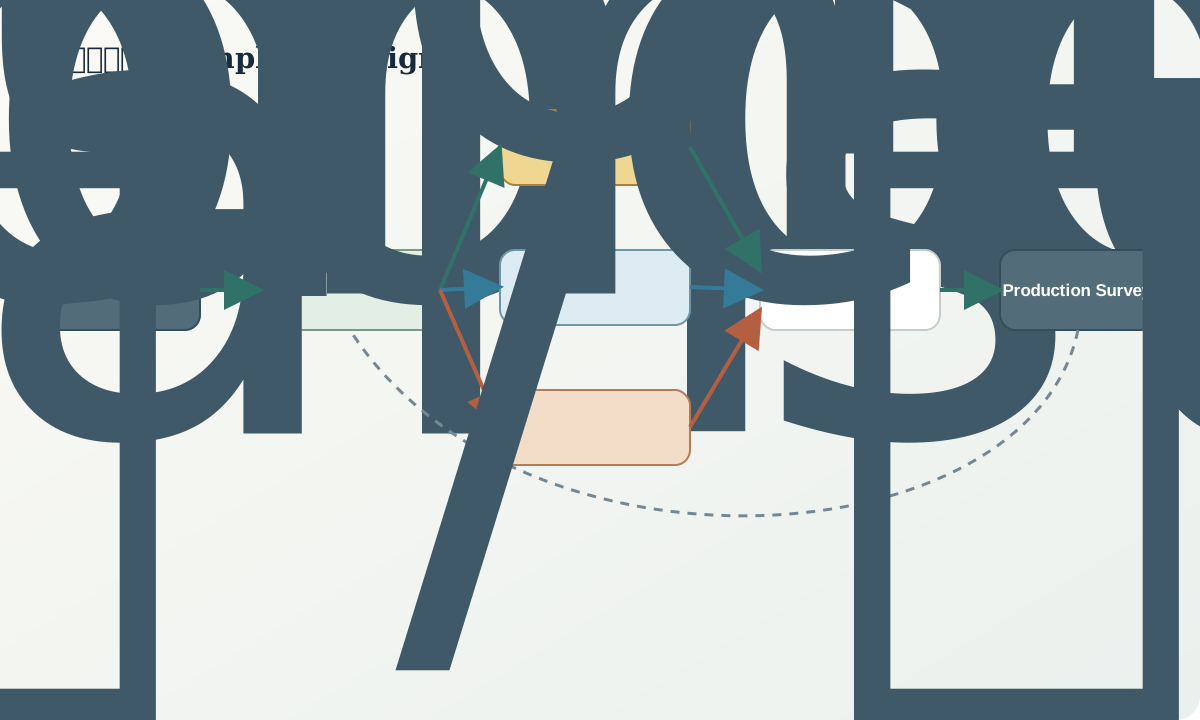
Support 包括 collected footprint、depth 或 horizon、increment 数、field mass、retained fraction、split mass 与 analytical aliquot。增加 composite increment 可降低 local heterogeneity,也会平均 narrow signal。更大 support 不自动更好,应与必须影响行动的 minimum footprint 匹配。
Randomisation 可防止 batch 和 time trend 与 geology 混杂。Analytical order 应在 spatial block 和 expected concentration group 间随机或平衡,并保留 control placement。Field collection order 可因安全与效率沿地理顺序,但 analytical randomisation 能降低 location 与 instrument drift 的 confounding。两种顺序都要保留。
Field Practice、Duplicates 与 Control Placement
Field protocol 应规定 site-selection tolerance、material acceptance、horizon 或 depth、tool、cleaning、increment pattern、mass、container、label、observation、photograph、coordinate、preservation、transport 与 exception。生产前应使用真实材料训练。协议必须说明何时不采、何时移位以及何时将样品标为 non-comparable。
Field duplicate 是按明确定义的 duplicate protocol 采集的第二份样品。相邻 independent grab、field material split 与 repeated measurement 估计不同 variance component。可在常规处理环节使用中性编码,但 audit record 不能丢失角色。Duplicate frequency 本身不等于质量,空间分布与 stage coverage 同样关键。
Blank 应放在可能发生 contamination 的阶段,reference material 应用于评估 accuracy 与 batch comparability,duplicate 应放在 precision 关键处。Control 要分布在 sequence 中;全部集中于 batch 末端无法发现短暂早期 drift。数量应足以发现会改变 survey decision 的 failure size,而不是机械满足百分比。
合成计算案例
某合成 Orientation line 横穿预期宽 120 m 的 footprint,station interval 为 40 m;即使 offset 不利,也通常有 2 至 3 个站落在 footprint 内。统一 Background subdomain 的 log-concentration 标准差为 0.36,拟使用四 increment composite。若这些 increment 在小尺度上近似独立,则均值的标准差为:
$0.36/\sqrt{4}=0.18.$
若邻近 increment 的平均 pairwise correlation 为 \rho=0.30,四 increment 均值的方差为:
$\sigma_{\bar{x}}^2=\frac{\sigma^2}{4}\left[1+(4-1)\rho\right],$
标准差为 0.36\sqrt{(1+0.9)/4}=0.248。独立假设过于乐观,composite 仍降低 local variability,但效果小于预期。
若 footprint 可能窄至 50 m,40 m station interval 可能只得到 1 至 2 个站,难以界定边界。正确反应不一定是把全区改为 20 m;可以保留 40 m screening,只对具有连贯 process evidence 的线 infill。由 decision rule 决定加密,而不是由视觉偏好决定。
设计审计流程
- 写明 decision、target population 与 minimum relevant footprint。
- 定义 medium、horizon、fraction、mass、preparation、extraction 与 unit。
- 绘制 frame exclusion、process domain 与 expected signal direction。
- 设计 orientation contrast,并预设 sensitivity 与 specificity test。
- 相对于 footprint 选择 line、station 或 network geometry。
- 按 heterogeneity、particle size 与 required resolution 设置 support。
- 在 field、preparation 与 analytical stage 布置 control。
- 分开保存 collection、submission 与 analytical order。
- 预设 acceptance、infill、redesign 与 stop rule。
- 版本化 design,并用真正的新观测验证调过的规则。
练习与复核
- 设计同时比较两种 soil horizon、两种 fraction 和 transported control domain,且不混淆 method 与 location 的 Orientation Survey。
- 将 composite 改为六 increment、pairwise correlation 改为 0.20 并重算标准差。
- 解释为何每 20 个 routine sample 旁放一个 field duplicate 仍可能漏掉关键 variance。
- 画出含 inaccessible area 的 sampling frame,并说明仍可支持的 inference。
- 为 narrow synthetic footprint 写一条 staged infill rule。
复核问题:推断的 population 是什么?单个 sample 的 physical support 是什么?Geometry 是否横穿预测足迹?每种 duplicate 估计什么 variance component?什么变化会触发 redesign?
来源与延伸阅读
- 采样引入的不确定性,提供估计 sampling contribution 与 heterogeneity 的设计。
- 国家尺度地球化学调查野外手册与方法,展示一致 field design、randomisation 与 duplicate placement。
- 河床沉积物采集与处理指南,连接 site selection、material 与 processing。
- 以数据质量目标开展系统规划,连接 decision、data need 与 tolerable uncertainty。