C3 · 出版卷 13
Regolith and Transport Effects
Residual/transported、hydromorphic dispersion、contamination
学习目标
读者应能区分 residual、locally reworked 与 transported regolith;追踪 vertical/lateral mechanical、chemical 与 hydromorphic pathway;预测 horizon、grain size 与 carrier phase 如何改变信号;为 sampling/threshold 定义 process domain;识别 external contamination;并用 terrain、mineralogy 与 multi-medium observation 约束 source displacement。
Regolith 不是遮盖 bedrock 的噪声,而是可以 preserve、amplify、attenuate、fractionate 或 relocate signal 的地质系统。解释必须问 sampled material 如何形成、组分来自何处、停留多久、什么现代过程仍能搬运它。
Weathering Profile 与 Residual Signal
Residual regolith 中 bulk material 大体位于 parent 上方,但 chemical mass 可纵向和横向移动。Dissolution 移走 mobile component;残余过程提高 resistant phase 比例;precipitation/adsorption 在 reaction front 富集;volume change 即使没有 element addition 也会提高 concentration。因此 concentration increase 不自动等于 mass gain。
Horizon relation 有诊断力:surface organic/oxide-rich horizon 可捕获 dissolved component,clay-rich zone 可 adsorption,saprolite 可保留 bedrock texture 与 local relation,duricrust/lag 可在 fines 移走后累积 resistant fragment。Horizon 应按 observed material 定义,而不是只看 colour。
Mass balance 需要 immobile/conserved reference,并假设 original composition 与 volume。假设弱时,应描述 relative pattern 与 mineral residence,不能声称 exact gain/loss。
Mechanical 与 Chemical Transport
Colluvium 沿坡移动,alluvium 沿 channel/floodplain,wind 可加入 regional fines,其他 mass transport 可远距离搬运。Transport 对 density、size、shape 与 durability 分选,resistant heavy mineral 与 clay-bound/soluble element 的路径不同。
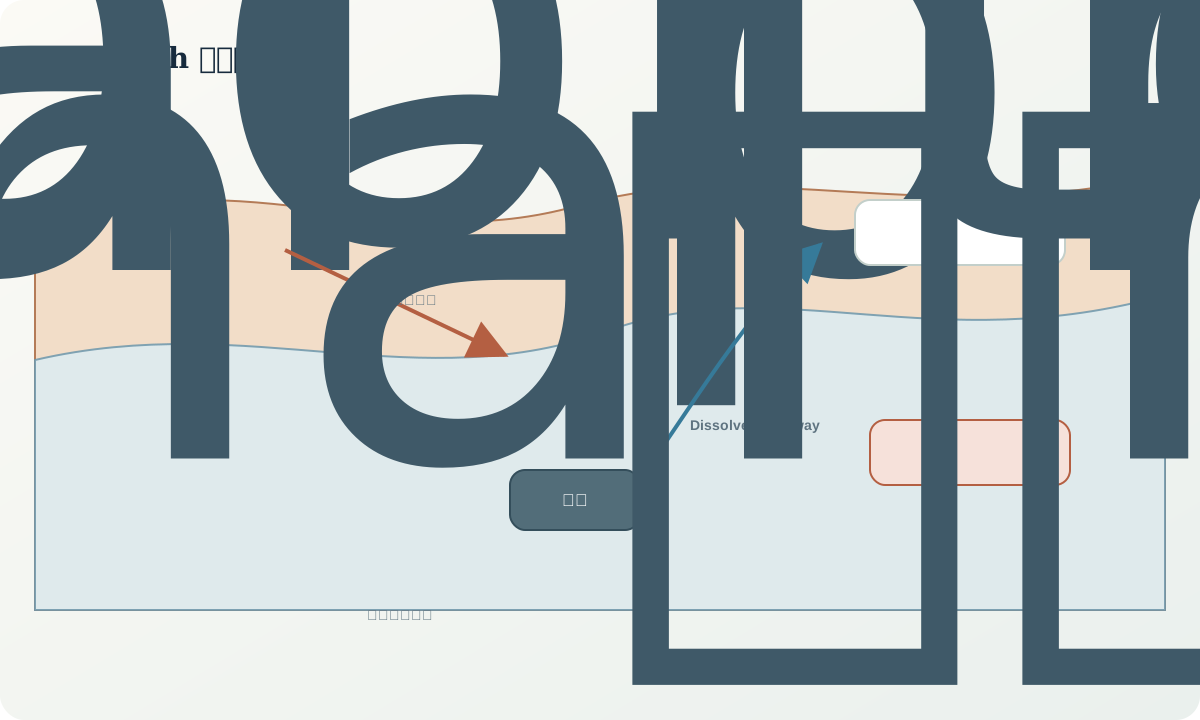
Chemical movement 受 water flow、acidity、redox、ligand、sorption surface 与 evaporation 控制。Dissolved element 可穿过 cover 并在 boundary precipitate,形成 displaced/secondary anomaly。Seasonal water table 和 episodic flow 改变位置与 amplitude。Weak extraction 可故意测 mobile/adsorbed fraction,stronger method 则同时测 transported detritus。
Mechanical 与 chemical pathway 可能方向不同:coarse resistant grain 沿坡,dissolved species 随 groundwater 向 discharge zone。Multi-fraction 或 multi-medium pattern 可区分它们,terrain 与 hydrology 是 hypothesis 的一部分。
Process Domain、Cover 与 Masking
绘制 residual upland、erosional slope、depositional footslope、channel、floodplain、external fill 与 disturbed surface。Domain 可带 uncertainty,但需显示,且 density 要支持分域推断。Residual-soil threshold 未经 comparability evidence 不能用于 transported sediment。
Cover 可通过 dilution 或阻断 upward dispersion 来 mask source,也可 preserve older anomaly、在 interface 富集或形成自身 lithological Background。Thickness、permeability、grain size、carbonate、salt、oxide 与 organic matter 控制 response。Thick cover 上的 absence 不等于 exposure 上的 absence。
External contamination 有不同 source geometry。沿 access route 的 linear pattern、structure 附近 point source、异常 particle 或 element combination 可提示它。Field observation、upstream/downstream logic、blank 与 alternative medium 用于检验;contaminated sample 保留 status 与 reason。
推断 Source Displacement
联合 slope/drainage direction、catchment、particle roundness/mineralogy、grain-size fraction、vertical profile、upstream sequence、water chemistry、landform age 与 independent geology。Sample 可支持 source corridor 或 upstream area,却不一定定位 point target。
不同 hypothesis 要有不同 prediction:local residual source 可能随 depth 增强并与 bedrock structure 对齐;transported detritus 可能在 coarse/heavy fraction 增强并顺坡;hydromorphic dispersion 可能出现在 fine coating、water 或 redox interface 并随 flow;external material 可能追随 infrastructure 且有 diagnostic debris。
Follow-up traverse 应同时横切 predicted geological geometry 与 transport vector。只沿 anomaly axis 加密不能区分二者。使用 paired horizon/medium,并在两侧加入 Background process domain。
合成计算案例
某合成 surface sample 含 30% local residual material,其 X 为 150 mg/kg;另有 70% transported cover,X 为 20 mg/kg。假设同一 mass basis 与 recovery,预期浓度:
$0.30(150)+0.70(20)=59\ \mathrm{mg/kg}.$
它低于 local component,却接近 transported Background 的三倍。若 global threshold 为 70 mg/kg,source 会被 mask;local fraction 降至 10% 时,值为 0.10(150)+0.90(20)=33 mg/kg。Thick transported cover 下 negative classification 的 power 很低。
同点 selective extraction 若报告 adsorbed X 为 18 mg/kg,而 transported Background 为 2 mg/kg,可能表示 upward/lateral dissolved movement。只有 extraction、carrier 与 control 排除 ordinary adsorption difference 后,才算 independent support;合理行动是 depth profile 与 cross-flow traverse,而不是直接声称 source。
Regolith 审计流程
- 描述 material、horizon、texture、clast、coating 与 disturbance。
- 绘制 residual、erosional、depositional、drainage 与 external domain。
- 识别 mechanical、chemical、hydromorphic 与 biological pathway。
- 陈述 predicted carrier、grain size、phase、depth 与 direction。
- 按 hypothesis 比较 bulk、fractionated 或 selective method。
- 使用 domain-specific Background 并保留 cover uncertainty。
- 分开 coordinate、anomaly footprint 与 inferred source area。
- 检验 local、transported、hydromorphic 与 contamination alternative。
- 用 paired media 横切 geological/transport direction。
- 随 field/mineralogical evidence 更新 process map。
练习与复核
- 把 local material 改为 45% 并重算,说明不同 particle recovery 会如何破坏方程。
- 分别画 residual enrichment 与 hydromorphic interface precipitation 的 vertical profile。
- 设计能区分 bedrock strike 与 downslope transport 的 cross-slope pattern。
- 列出区分 road-derived material 与 geological linear anomaly 的证据。
- 解释为何 volume loss 可在无外部 addition 时提高 concentration。
复核问题:材料 residual 还是 transported?什么 phase/pathway 携带信号?可移动多远、什么方向?Cover 是否使 negative result 不敏感?哪种 follow-up 横切竞争预测?
来源与延伸阅读
- Regolith 与地球化学制图概念,连接 weathering material、landform 与 geochemical pattern。
- 深风化地形中的地球化学勘查策略,讨论 lateritic cover 下的介质与过程选择。
- 河床沉积物采集与处理指南,支持 transport-aware drainage interpretation。
- 地球化学勘查介质综述,回顾 residual、transported、hydromorphic 与 biological dispersion。