C3 · 出版卷 13
Geochemical Interpretation and Targeting
Process-based interpretation、false positives、negative evidence
学习目标
读者应能把 mapped geochemical pattern 转换为 alternative process hypothesis;区分 observation anomaly、source hypothesis 与 exploration target;不 double count 地组合 supporting/negative evidence;在解释 absence 前评价 data quality、detectability 与 transport;按 discrimination 与 uncertainty reduction 安排 follow-up;并写出 conditional、auditable target statement。
解释是 inverse problem:不同 source、transport、medium 与 analytical combination 可产生相似观测。目标不是从一幅图选最诱人的地质名称,而是建立少量 viable explanation、推导 risky prediction,并选能区分它们的 follow-up。
从 Observation 到 Process Hypothesis
先写不含 cause 的 observation statement:medium、support、method、domain、spatial pattern、element/ratio contrast、quality status 与 uncertainty;再提出细节相当的 alternative,包括 local geological source、transported geological material、ordinary lithology/regolith variation、hydromorphic redistribution、external material、preparation/analytical artefact 与 data-handling error。
每个 hypothesis 都要预测 location、direction、carrier phase、element association、depth/horizon response、cross-medium relation 与 negative evidence。可容纳任何结果的假设不可检验。记录 preservation、method sensitivity 等 auxiliary condition,避免预测失败后静默找借口。
Anomaly geometry、inferred source 与 target 分开。Drainage anomaly 支持 upstream catchment,transported soil anomaly 支持与 transport direction 相反的 corridor。Target 可更深或 offset,必须保留 uncertainty envelope 与 alternative geometry。
Evidence Integration 与 Dependence
按 causal origin 分组:field geology、regolith process、independent medium、mineralogy、geochemical association、spatial pattern 与 QA/QC。同一 carrier 的多个 correlated element,或同一 assay table 派生的多张图,并非 independent evidence,应作为一个 family 或显式建模 dependence。
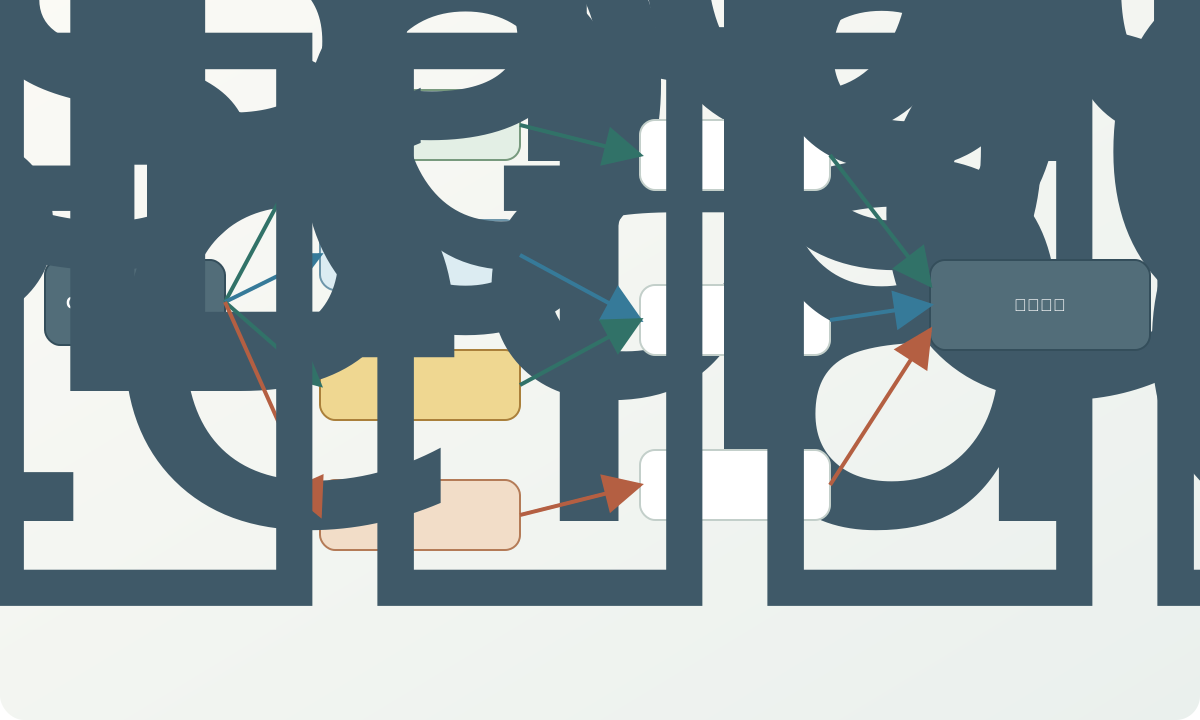
Evidence 可 support、contradict 或 uninformative。High-quality absence 只有在 hypothesis 预测该 support 下可检测信号时才是 negative evidence;failed method、thick masking cover 或 wrong fraction 使观测 indeterminate。Detection adequacy 必须显式陈述。
校准充分时可用 conditional-probability update,否则使用 transparent evidence matrix 与 bounded scenario。Score 不是 probability,高分不能越过 failed quality gate 或 refuting process observation。Sensitivity analysis 应揭示哪个假设控制 rank。
False Positive、False Negative 与 Follow-up
False positive 不是简单的“高值但没发现”,而是把其他过程生成的观测错分为 target process;false-negative risk 是 target process 存在但所选 signal chain 不能检测。Orientation evidence、control 与 process model 用于估计风险。
Follow-up 应最大化 discrimination,而不是只增加 density。Transport 与 local source 对 grain fraction 预测不同时测 paired fraction;hydromorphic 与 detrital process 对 phase 预测不同时比较 selective/broader extraction 与 mineralogy;artefact 若预测 batch alignment,则 random order reprepare retained material,并采 independent field check。
还要考虑 burden 与 disturbance。能排除主要 alternative 的低影响 observation 可能优于产生 ambiguous evidence 的 intrusive test。Legal permission、safety 与 environmental control 是 gate,不能被高 geochemical score 抵消。
Target Statement 与 Decision Gate
Target statement 应包括 observation footprint/version;leading 与 alternative source hypothesis;geological/transport geometry;necessary process condition;supporting/refuting evidence;quality/detectability status;data gap;next test prediction;positive、negative 与 indeterminate action。
可使用 observation、anomaly under review、process-supported anomaly、follow-up target、tested target 等 maturity state。Promotion 需要预先定义 evidence;control failure、alternative strengthening、access unresolved 或 test 无法改变 action 时应 downgrade/pause。
Geochemical targeting 不做经济或资源结论。Surface medium concentration 不是 grade、continuity、recoverability 或 value;target rank 只是既定 exploration decision 下的 priority,不是 discovery promise。
合成计算案例
某合成 X–Y anomaly 有三个 hypothesis:H_1 local bedrock process、H_2 transported material、H_3 preparation contamination;初始 weight 为 0.40、0.35、0.25。Mineralogical observation 的 likelihood 为 0.70、0.45、0.10,未归一 weight 为 0.280、0.1575、0.025,总和 0.4625;归一后为 0.605、0.341、0.054。
Cross-slope profile 又与 transport direction 对齐,其 conditional likelihood 为 0.25、0.75、0.30。更新后未归一 weight 为 0.1513、0.2558、0.0162;归一约 0.357、0.604、0.038。Leading explanation 从 local source 变为 transport,follow-up 应向 up-transport 移动,而不是只在最高值周围加密。
这些数是 synthetic judgment,不是 calibrated discovery probability。应在合理范围内改变 likelihood;若 H_2 始终领先,方向较稳健,若 rank 很容易改变,则应输出 tied hypothesis 并设计更有区分力的 test。
解释审计流程
- 写 cause-free observation statement,包含 quality 与 support。
- 建立 local-source、transport、ordinary-Background 与 artefact alternative。
- 为各 hypothesis 推导 spatial、mineralogical、medium 与 analytical prediction。
- 把 absence 当 contradiction 前先检验 detection adequacy。
- 按 causal origin 合并 dependent observation。
- Scoring 前应用 necessary quality/process gate。
- 测试 threshold、domain、censoring 与 likelihood sensitivity。
- 分开 anomaly、inferred source 与 target geometry。
- 选择安全、合法且最能区分 hypothesis 的 follow-up。
- 结果到达前记录 positive/negative/indeterminate action。
练习与复核
- 把 synthetic update 改为 equal initial weight 并比较最终顺序。
- 为 residual source、downslope transport 与 preparation contamination 写不同 prediction。
- 找出同一 assay table 派生、不能视作 independent evidence 的三张图。
- 设计一个 negative result 能真正削弱 local-source hypothesis 的 follow-up。
- 把“Anomaly 证明 target”改成 conditional、auditable statement。
复核问题:不带 cause 的观测是什么?哪些 viable alternative 仍存在?Negative evidence 是否可检测?Evidence group 是否独立?哪个结果会改变 action?
来源与延伸阅读
- 基于过程的勘查地球化学解释,发展超越 threshold exceedance 的 geological interpretation。
- 深风化地形中的地球化学勘查策略,比较 transported cover 下的 process-sensitive follow-up。
- 用 Compositional Method 解释 Primary Halo,把 multivariate pattern 连接到 process 与 targeting。
- Background 与 Anomalous Population 表征90085-9),讨论 Background/Anomaly ambiguity。